
This September, Stanley Gibbons Baldwin's is proud to present Clandestine Operations - Inc The D.J. Croll Medal Collection & Other Properties, one of our most comprehensive auctions featuring material connected to two famous British WWII clandestine operations as well as other properties.
Military Medals
Auction Preview: Killed in the Charge of The Light Brigade
Cordelia Cheriton
18 August 2026
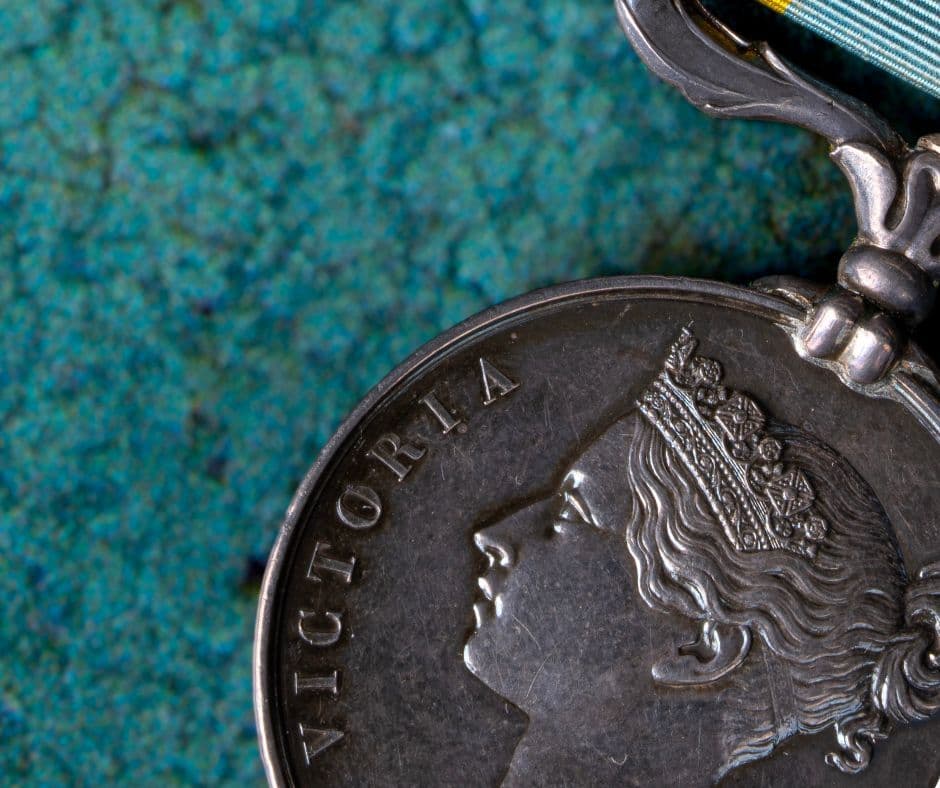
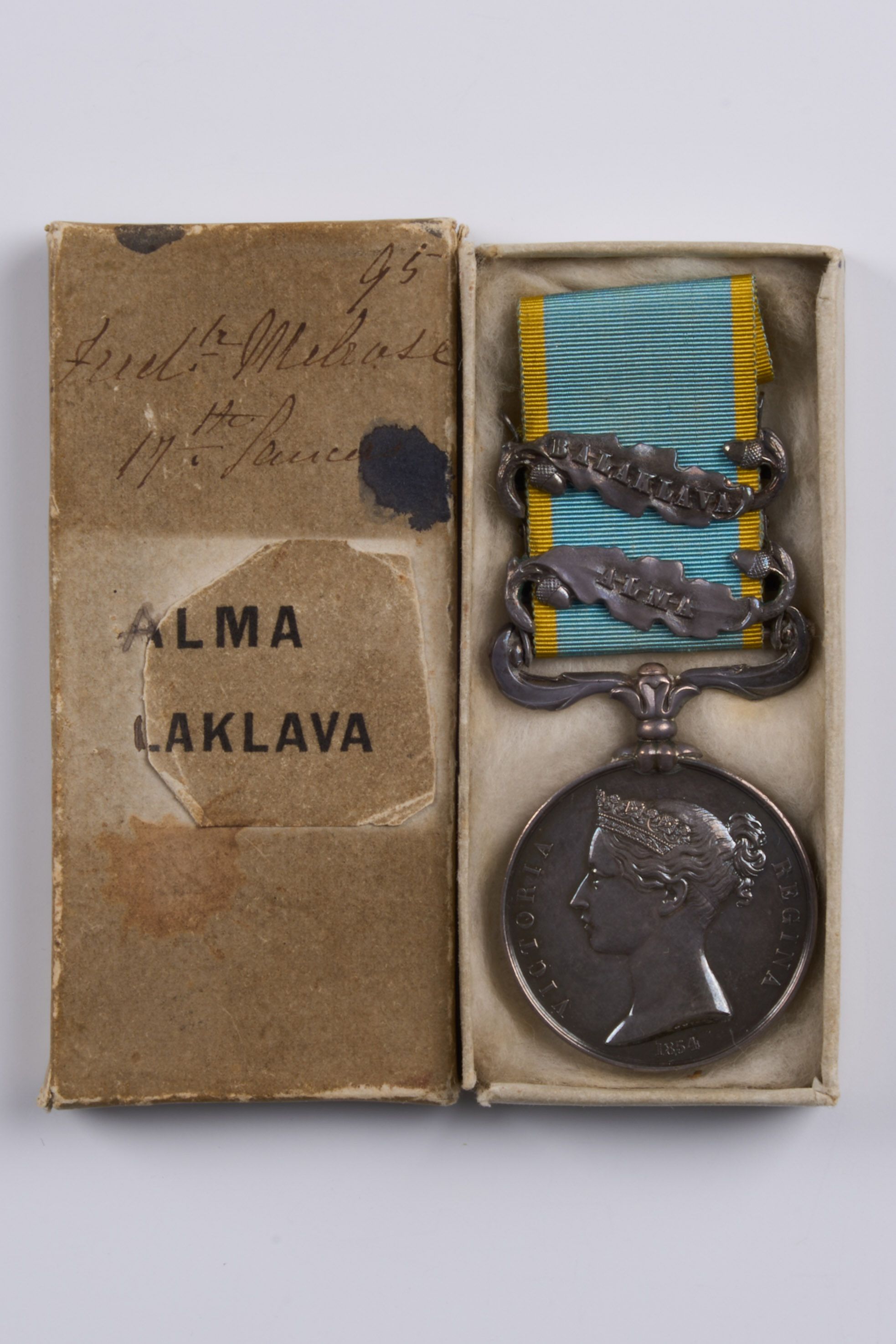
One of the many highlights of the sale is Lot 77, a medal awarded to Private Frederick Melrose of the 17th Lancers, who was one of many killed in action at the Battle of Balaklava in the infamous Charge of the Light Brigade. Before enlisting in the army, Melrose was said to have been a Shakespearean actor, and is reported to have poignantly quoted from Act IV, Scene III from Henry V a few moments before his death. This scene the St Crispin’s Day Speech, which refers to the soldiers fighting courageously as a band of brothers despite being heavily outnumbered in the Battle of Agincourt, which was fought exactly 439 years prior to the Battle of Balaklava, (25th October 1415). The Charge of the Light Brigade was made famous by Alfred Tennyson’s poem of the same name (published in 1854), and was the result of a disastrous miscommunication which led to one of the bloodiest fights of the Crimean War, with numerous soldiers being killed or wounded. The Crimean War acted as a platform for new technologies to be tested, and these subsequently became widely used due to their superiority over older or more traditional methods.
The Battle of Balaklava and the Charge of the Light Brigade:
In 1854, British, French and Ottoman forces besieged the naval port of Sevastopol, and Russian troops were forced to sink their ships to prevent the allied forces from attacking the harbour from the sea. Following battles at the Bulganek and Alma rivers, on the 25th October 1854, Russian forces broke enemy lines to attempt to gain a more stable position. However, they were met by the defences known as ‘The Thin Red Line’ – the 93rd Highland Regiment led by Sir Colin Campbell, who formed two thin lines of soldiers, rather than the conventional formation of a square four lines deep. They managed to repel the Russian troops, whose retreat was then intercepted by the Heavy Brigade. Despite the Heavy Brigade being outnumbered by more than three to one, the element of surprise was enough to throw the Russian forces into disarray. Rather than capitalize on the chaos created by the Heavy Brigade, cavalry commander Lord Lucan, chose to delay a further attack until reinforcements had arrived.
Meanwhile, British commander in chief, Lord Raglan had become aware that Russian troops were using lassos to steal British 12 pounder naval guns from the Causeway Heights area. Raglan was keen to retrieve them both for military purposes, and in order to maintain his record of never having lost a gun in battle, something that was also upheld by his mentor at the Battle of Waterloo, the Duke of Wellington. He therefore issued an order to the cavalry to ‘advance rapidly to the front, follow the enemy, and try to prevent the enemy carrying away the guns.’ Lord Raglan’s senior staff officer, Captain Louis Nolan was sent to relay the message to Lord Lucan and his deputy, Lord Cardigan. Lord Lucan voiced his concerns to Nolan surrounding the lack of infantry support, but these were dismissed. Some reports state that Nolan stressed that they were to ‘attack’ without delay, leading some scholars to question whether the paraphrasing of Lord Raglan’s written order to include more impactful terminology contributed to the misunderstanding.
The breakdown in communication was further exacerbated when Lord Lucan asked which guns they were to attack, and an ineffectual indication from Captain Nolan led him to believe that the order referred to the guns in the north valley rather than those in the Causeway Heights. Despite knowing that this would be a death trap, Lucan and Cardigan led their troops towards the north valley, which was subsequently penned the ‘Valley of Death’. They were attacked on three fronts, and around a third of the Light Brigade were killed or wounded. On seeing the devastation unfold, Lord Raglan halted the Heavy Brigade from joining the fight, but this only allowed the Russian army to encircle the Light Brigade. Evidence has suggested that if the Heavy Brigade had been allowed to advance, a British victory at the Battle of Balaklava would have been plausible. Instead, the battle ended on a strategic stalemate, with allied forces controlling Balaklava itself, but the Russian army had taken control of the main road and primary supply route into the area.
Technological innovations in the Crimean War:
It could be argued that the Crimean War acted as a springboard for new technologies to be introduced, as many of these methods became widely used in subsequent years. For example, steamships and steam gunboats were used not only for naval warfare, but also for transporting supplies and troops, and the war prompted a boom in their production. Additionally, British engineers Samuel M Peto, Edward Betts and Thomas Brassey constructed a railway line between the harbour at Balaklava and Sevastopol to allow soldiers and provisions to be transported between the two areas more easily. However, the railway could be unreliable and sometimes malfunctioned, which caused injuries and even death.
Perhaps some of the most notable technological advances used in the Crimean War were in methods of communication, using telegraph systems and photography. A mixture of optical and electrical telegraph systems were used, predominantly by French troops, to convey information between countries or across multiple languages. Optical telegraph systems used Chappe towers, which were placed within sight of each other, and used mechanical rods to convey messages in a format similar to semaphore. Electrical telegraph systems ran on a series of wires either above ground or underwater, which used electrical currents to transmit messages. This enabled updates to be sent quickly and easily, and ensured that decisions could be made from afar. For example, Queen Victoria demanded that military commanders provided daily telegraphic updates on the progress of the war. This did, however, cause some resentment among military generals, who felt that their autonomy in decision-making was being taken away from them, and some complained that sending telegraphs was extremely time-consuming, and that their efforts would be better directed towards military matters.
Reports of the Crimean War were also published in newspapers, with the Daily Telegraph being founded in 1855 specifically to report on the war. Steam powered rotary presses were perfected in 1843, and this made newspapers cheaper, therefore more accessible to the public, allowing them to stay informed about the events in Crimea. Photography was also developing as an industry at the time, and pictures of the war were taken by Roger Fenton, who exhibited over 300 photographs of the Crimean War at the Gallery of the Society of Painters in Autumn 1855. One of his most famous pictures is the ‘Valley of the Shadow of Death’ which shows the ‘Valley of Death’ following the Charge of the Light Brigade. Through these photos and newspaper reports, the general public were able to see the truth of war for the first time, and the violence, devastation and bloodshed were presented in an unavoidably bleak manner.
Also highlighted by these media was the poor sanitation and substandard medical supplies that the soldiers were experiencing; more than 80% of the deaths in Crimea were due to diseases caused by poor conditions, rather than the soldiers’ wounds themselves. The government were criticized for not doing enough to improve the environment for the troops, most famously by Florence Nightingale, who became a nurse in Crimea to experience the conditions first-hand. Nightingale conducted many statistical analyses on causes of death in Crimean field hospitals and used the evidence to campaign for more sanitary conditions. Additionally, the engineer Isambard Kingdom Brunel was asked by the government to design a pre-fabricated hospital that provided ventilation and better facilities, that could then be reconstructed in Crimea. Brunel used Paddington Station to construct his prototype, which emulated Joseph Paxton’s Crystal Palace in design. 1,408 soldiers were admitted to this hospital, yet only 50 of them died, highlighting that Nightingale and Brunel’s efforts in the Crimean War revolutionized nursing and hospital care, and formed the basis for methods still used today.
Whilst a mixture of traditional and new technologies were used during the Crimean War, and many of the methods were inefficient, advanced technologies provided a symbol of hope and promise for the future, and often formed a foundation for modern procedures.
This lot provides a compelling insight into one of the most famous military blunders in British history, and it represents the courage displayed by the soldiers in charging towards Russian lines heavily defended by artillery. It dates to a period defined by technological change, and would be a scarce, yet fascinating piece of history to own.