
Lot 325
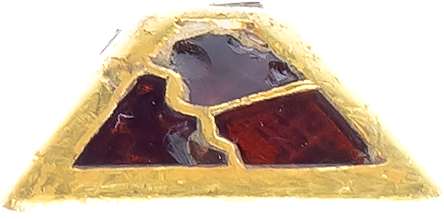
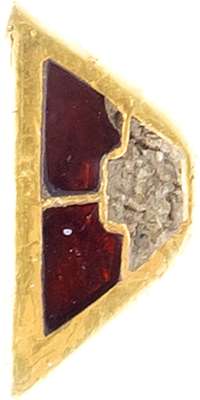
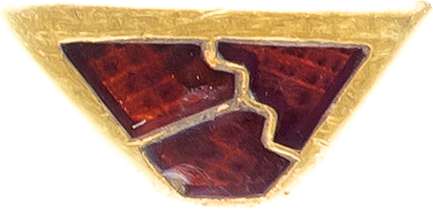
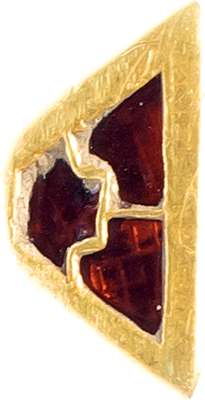
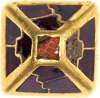
Anglo‑Saxon Gold Pyramid Mount, c. AD 580‑630. An extremely rare Anglo-Saxon gold pyramid mount inlaid on four sides with

Ancient, British and World Coins, Tokens and Medallions | 111
Auction: 5 July 2023 at 09:50 BST
Description
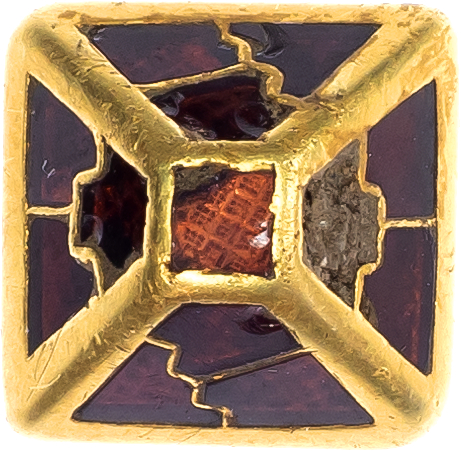
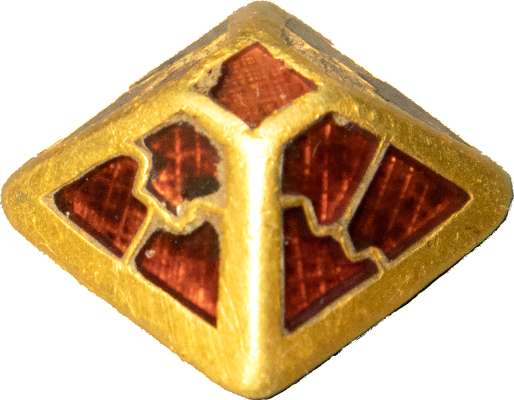
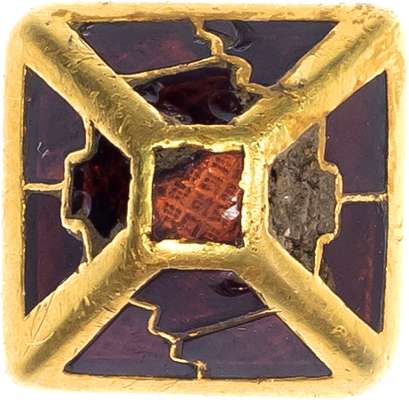
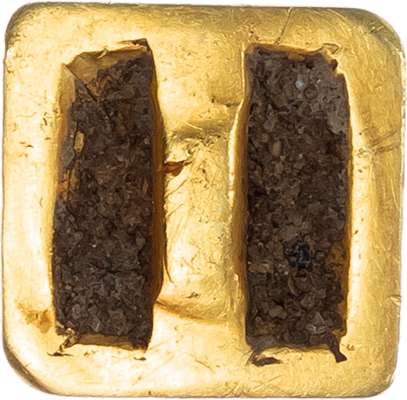
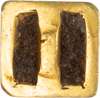
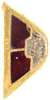
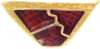
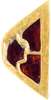
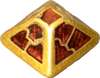
Anglo‑Saxon Gold Pyramid Mount, c. AD 580‑630. An extremely rare Anglo-Saxon gold pyramid mount inlaid on four sides with foil-backed cloisonné garnets in two distinct complex styles of cell; arrow shaped and stepped with a square garnet top‑set. Garnets are backed with ‘waffle‑stamp’ foil. Bar across base. One cell is missing its garnet and of the remaining stones approximately half show minor chipping or cracking, however overall, the find is in pleasing condition. An excellent example of Anglo‑Saxon metalwork.
Specifications: 11.9mm x 12.1mm x 6mm. 3.00g (inclusive of embedded soil).
References: Mortimer Type 1iv. See also PAS reference NARC-F627F6, 2013T344 for a similar example in silver.
Provenance: Discovered in Norfolk, 2021. Declared Treasure ‑ PAS NMS‑81FAC8 2021T218 – subsequently returned to the finder.
For overseas shipping of this lot, please note that the object will require an export licence, please contact us for further information.
Pyramidal mounts are found in Anglo‑Saxon England and Continental Europe, particularly with the latter golden cloisonné types known from finds in Sweden. It is theorised that they were made to secure swords in their scabbards via a fastening bar. Whilst relatively uncommon as grave finds, mounts have become relatively more frequent as single metal detecting finds. This item itself was found geographically in an area which would have been part of the early-medieval Kingdom of East Anglia, one of seven kingdoms that constituted the traditional ‘Heptarchy’ of Anglo-Saxon England in academic literature. The constitute parts of the mount would have been incredibly exclusive at that time. Gold was used in other artefact types of high status such as Thrymsa coins, other sword furniture and brooches. The garnet gemstones would have originally come from the Indian subcontinent. Part of the allure then as much as now would have been to display status from the difficulty of acquiring the component parts or manufacturing the object due to its intricate nature.
Two such pyramid mounts were found at the famous Sutton Hoo burial mounds thought to be the resting place of East Anglian King Raedwald d. circa 630 AD. Other comparisons could be made with the famous Mercian Staffordshire Hoard, where several gold cloisonné artefacts are similar in style. Therefore, based on such evidence it is likely that this item also belonged to a high-status individual within Anglo-Saxon society of the time. In coverage from the numerous articles (BBC, Smithsonian Magazine, Treasure Hunting, Daily Mail Online etc) written on this very item, it was speculated by experts that the mount would have been owned by an Anglo-Saxon “King or Lord”.
Today Anglo‑Saxon pyramid mounts, especially those made of gold, are extremely rare metal detecting finds. The PAS database records approximately one hundred mounts of this period made of both copper and silver; both of which can be gilt, and less than a dozen solid gold examples extant that are analogous to this specimen.
Due to this rarity and archaeological importance, there is a dearth of solid gold mounts available on the open market. Some can be found in museums, such as the Sutton Hoo examples which reside in the British Museum. On the open market, a non‐cloisonné gilt copper alloy filigree type sold for over £16,000 at Bonhams in 2016. Another fine example of a gold and garnet gold cloisonné mount of similar size from the John Moor Collection accumulated in the 1960s achieved £30,000 in late 2017 in the Frieze Masters Fair but was without provenance to prove it was a British rather than a continental find.
An Anglo-Saxon object of this quality and rarity, combined with an excellent provenance having passed through all of the required channels, will surely attract much attention.