Auction Preview: Zodiac Coinage and the Mughal Emperor Jahangir
Ema Sikic
8 June 2026
Zodiac Coinage and the Mughal Emperor Jahangir
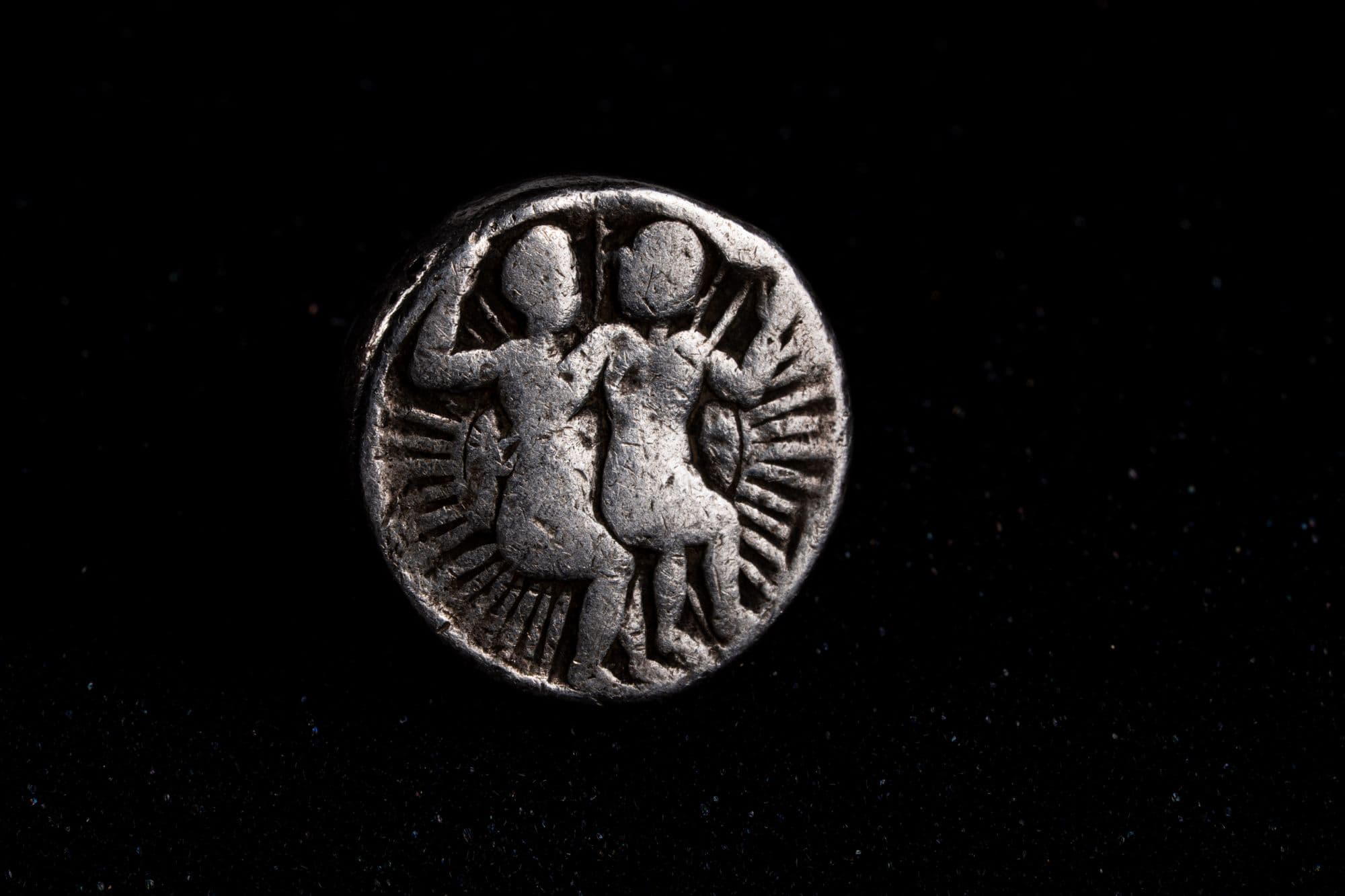
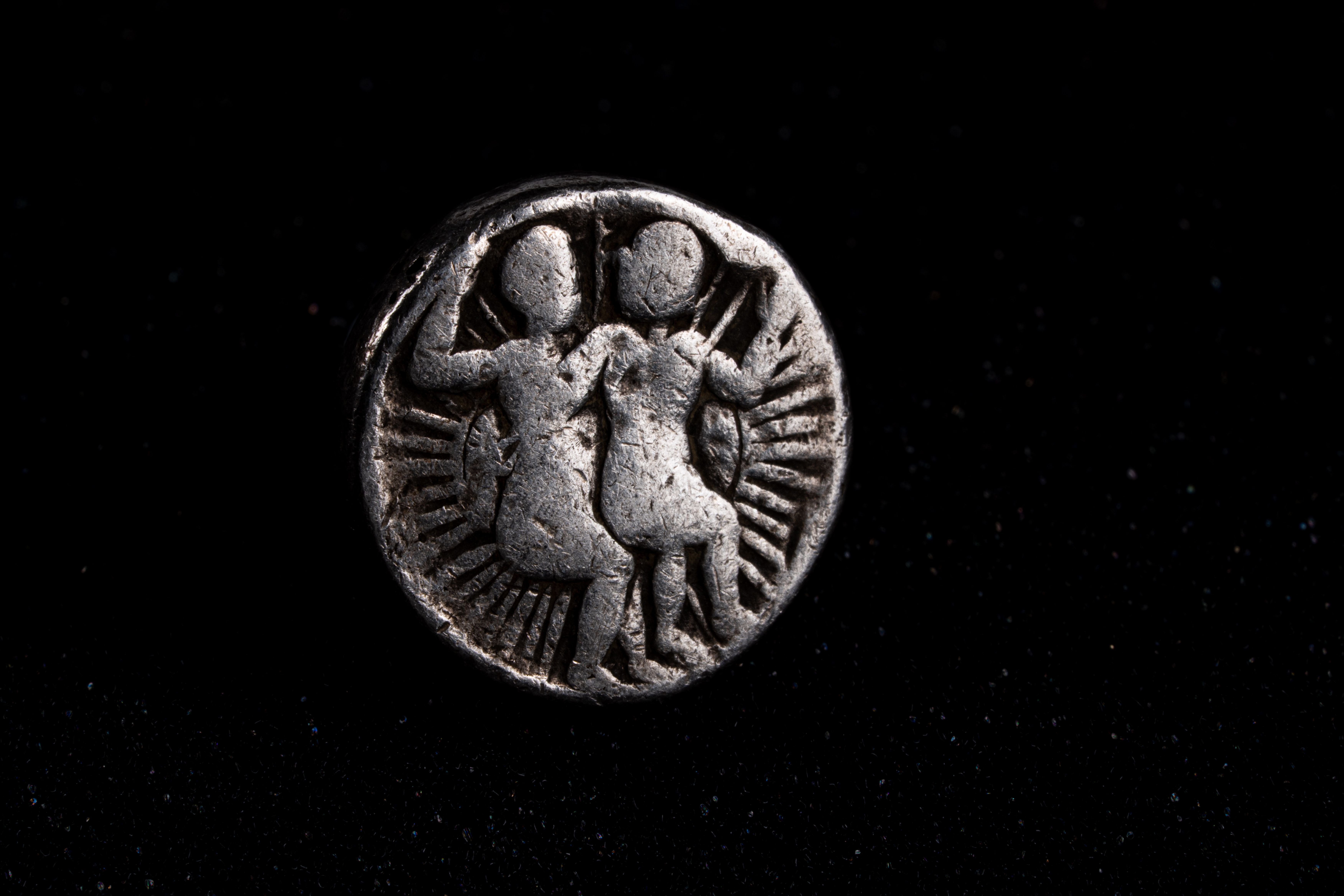
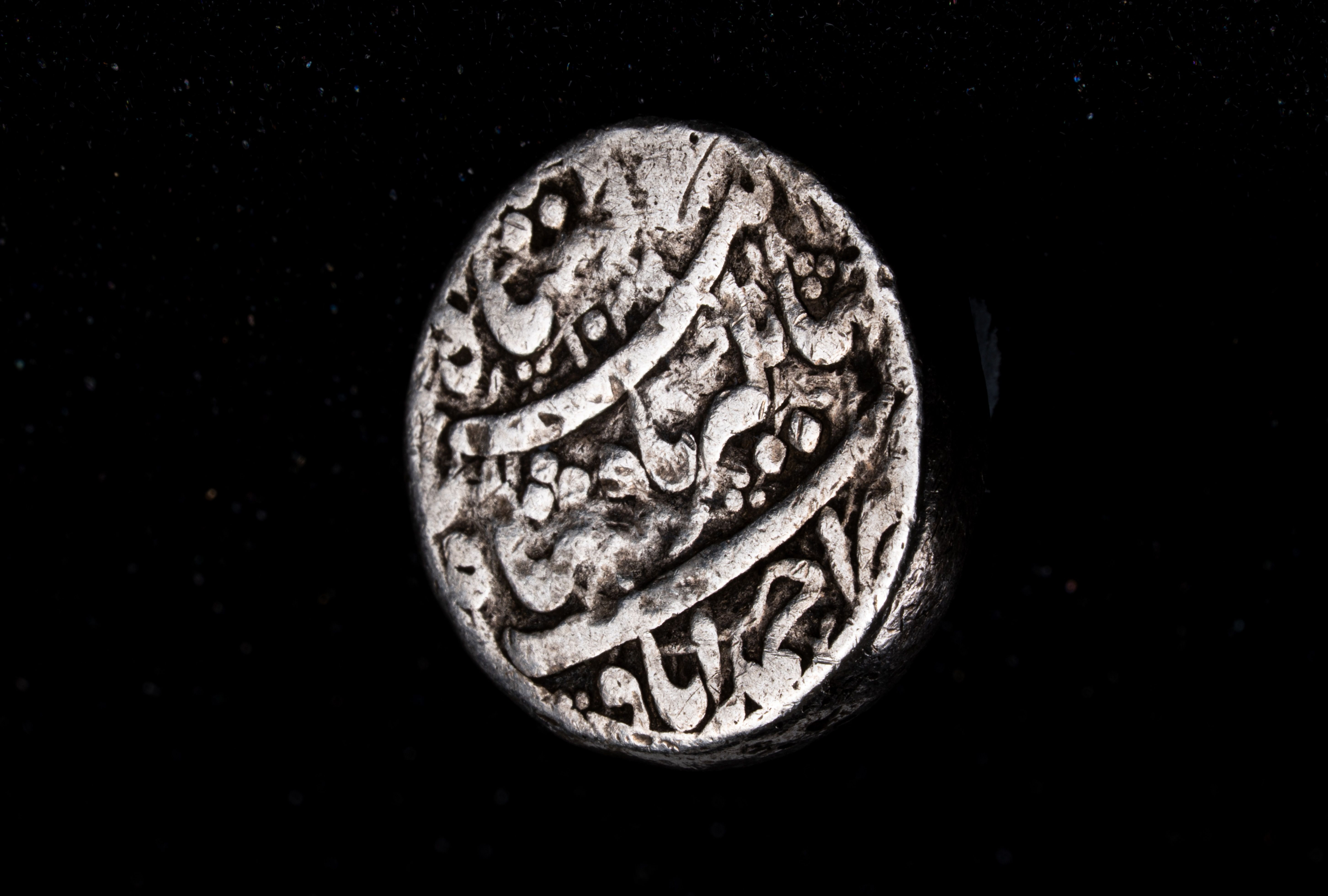
One of the most anticipated upcoming lots in our 131st Ancient, British, and World Coin Auction is the silver Gemini Rupee, commissioned by the Mughal Emperor Jahangir between AH1027 and 1034 (1617 - 1624 AD).
Thinking about selling?
Our specialists are here to help guide you through every step with care and expertise.
Jahangir only minted a handful of these, a full set of gold Mohurs (minted at Agra) and silver Rupees for just the first five zodiac signs. Their rarity meant that people used to wear them as talismans, and thus many replicas were created. Alongside coins featuring a portrait of Jahangir himself either holding wine, a book or fruit, this series are some of the first instances of pictorial decoration on Islamic coinage.
The Gemini Rupee was minted at Ahmadabad, which has been the capital of the state of Gujarat for the last six centuries. In the 17th century, it was a thriving town for indigenous crafts, and many of the mosques were used by the craftsmen for their work. There was a strong sense of community there at this time, shown by the ‘Mahajan’, a nobility guild which brought people together regardless of their religion, and which had a focus on wellbeing for the town’s residents.
Some variation exists between the Gemini depictions on gold Mohurs and silver Rupees. For example, on Mohurs, the Gemini twins are sometimes shown embracing each other, or holding weights or a mace in their hands, whereas the silver Rupees tend to display them as side by side.
There is much speculation surrounding the reason for which the Zodiac series was commissioned. One such legend is recorded by Jean Baptiste Tavernier, a 17th century French merchant who travelled extensively around the Mughal Empire. It was said that Jahangir’s wife Nur Jahan wished to immortalize her memory, so charmed her husband into allowing her to become the sovereign for one day only. Having already stockpiled silver and gold and distributed dies to nearby mints, her first act as empress was to issue orders for the zodiac series in both materials to be made.
Whilst an interesting story, sadly it could not be true, since none of the coins mention the queen’s name, therefore would not have fulfilled the aim of immortalizing her memory! Furthermore, Jahangir himself recounts his idea for these coins in his memoir: ‘It now occurred to my mind that, instead of the name of the month, the figure of the sign of the Zodiac corresponding to the particular month should be stamped. This was my own innovation. It had never been done before.’
However, there still remains an issue with the commission of the Zodiac series. The Hijri calendar is lunar, not solar, therefore does not follow the zodiac in the same way. Why therefore, did Jahangir decide to mint coins that followed a different calendar to that which was used in the Islamic world? To answer this, we must look back to Jahangir’s father and predecessor as Emperor, Akbar. In AH 990 (1582AD), Akbar decided to adopt his own universal religion called the Dīn Ilāhī (Divine Faith). This combined some of the key aspects of Hinduism, the fire worship of the Parsees, and took the calendar structure of the Persian year, which had a solar basis, and the Nauroz (New Year’s Day) was therefore marked by the Sun’s entrance into Aries.
When Jahangir came to the throne in AH 1014 (1605 AD), he maintained a great respect for the Sun, naming himself Nur ud-din Muhammad Salim, with a royal name Jahangir – ‘Nur’ means light or illumination. He was also known to praise and take a great interest in multiple other religions, shown by the way in which he used the Ilāhī months, but the regnal year can be found on coins, sometimes also with the Hijrī year.
The Gemini Rupee provides a fascinating insight into 17th century Mughal religion, and the philosophical ideas of Jahangir. Combined with its extreme scarcity, this coin is well worth bidding on in the upcoming auction.