Please can you introduce yourself?
“My name is Visnu and I go by the alias EXIA, I am the founder and owner of EXSOURCED. What began as a personal passion for trading cards has, over the past six years, evolved into a global business operating at the highest levels of the collectibles market.”
Please can you introduce your business?
“EXSOURCED is a private brokerage specialising in some of the rarest and most sought-after collectibles in the world. Our mission is to source and deliver dream assets directly to our clients through a discreet and highly curated process.
“We focus heavily on rare Pokémon and trading card game (TCG) assets, connecting elite collectors and investors with pieces that are often unavailable on the open market. Through our exclusive global network, we facilitate private sales across key hubs including London, Hong Kong, Singapore, and Japan.
“With strong international relationships, we provide unparalleled access to high-value collectibles - allowing our clients to acquire exceptional pieces with ease and confidence.”
What makes your business unique?
“What truly differentiates EXSOURCED is our access and relationships.
“In a market where trust is everything, we have built direct connections not only with high-end buyers but also with original holders of rare cards and private collectors who remain entirely off social media. This level of access is extremely difficult to achieve and has been developed over years of consistent presence in the industry.
“We operate in a space where passion meets investment. Our clients are not only collectors - they are entrepreneurs and business leaders who value both the emotional and financial significance of these assets.”
How long have you been trading cards? How did you get into trading cards?
“I have been involved in trading cards for over six years. What started as a hobby quickly grew into a serious pursuit as I recognised both the cultural importance and investment potential within the space.
“Over time, I became deeply embedded in the ecosystem - building relationships, understanding market dynamics, and eventually transitioning from collector to broker.”
Typically who are your customers/partners?
“Our clients and partners are typically high-net-worth individuals, entrepreneurs, and business owners with a strong appreciation for collectibles.
“They are often individuals who find traditional investments less engaging and are drawn instead to assets that carry nostalgia, rarity, and cultural significance. For them, collecting is both a passion and a strategic investment.”
Typically where do you buy cards?
“We source our cards globally, depending on the rarity and origin of the item.
“Some of our most exclusive pieces come directly from Japan - often from original winners of promotional cards. Others are acquired from long-standing private collections that have been built over 15+ years and have never been publicly seen.
“Our ability to access these hidden markets is a key part of our value.”
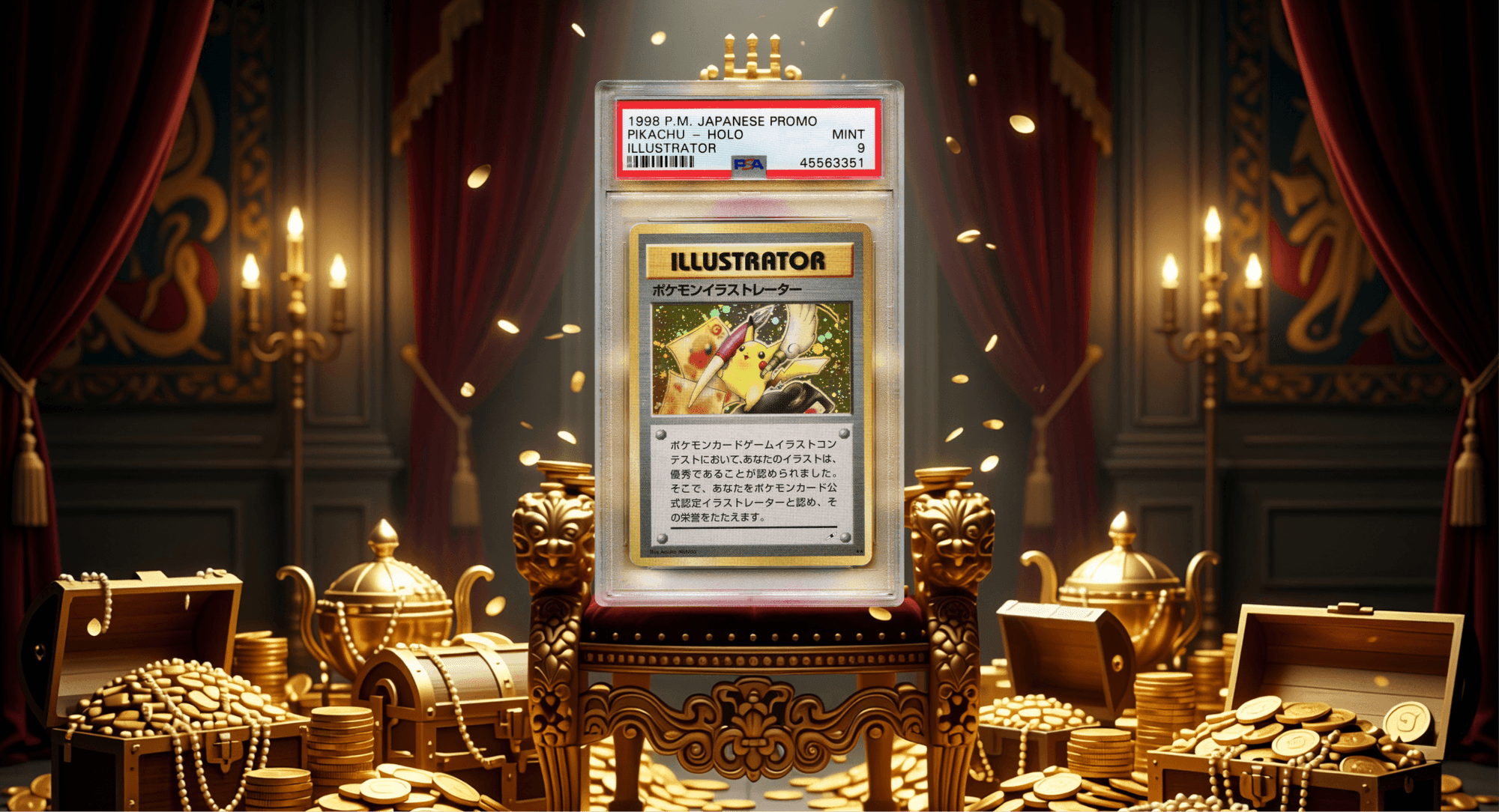
How did it feel to purchase a Pikachu Illustrator from Stanley Gibbons Baldwin’s?
“Being involved in the acquisition of the Pikachu Illustrator was an incredibly emotional and rewarding experience.
“In this case, my role was to broker the transaction - connecting my private client directly with the auction house and ensuring both sides were aligned throughout the process. Acting as a trusted intermediary, I facilitated a seamless transaction at the highest level.
“The Illustrator is widely regarded as the pinnacle of collecting within the Pokémon ecosystem, and being able to play a part in securing such a historic piece is a privilege.
“A special thanks must go to the team at Stanley Gibbons Baldwin's, who were exceptional throughout. Their professionalism and expertise made the entire process smooth and efficient from start to finish.”
Where is the Illustrator off to next?
“The Illustrator is now heading to Singapore, where it will be held within a private collection for many years to come.
“There is hope that, in the future, it may be showcased publicly - allowing a wider audience to appreciate its significance.”
What is the market for trading cards like at the moment?
“The trading card market is currently extremely strong.
“High-profile sales and record-breaking transactions have brought global attention to the space. Pokémon cards, in particular, have established themselves as a serious alternative asset class, in some cases outperforming traditional benchmarks such as the S&P 500.
“Demand continues to grow as more investors recognise the potential of collectible assets.”
How has the market changed in the last five years?
“Over the past five years, the trading card market has undergone a significant transformation.
“What was once a space driven primarily by collectors has evolved into a far more sophisticated ecosystem - now attracting funds, institutional capital, and ultra-high-net-worth investors. The market is no longer solely about passion; it is increasingly shaped by strategic investment and long-term capital allocation.”
The key question is: why?
“Part of this growth is undoubtedly driven by nostalgia. Many of today’s investors grew up with Pokémon, and as their wealth has increased, so too has their desire to reconnect with culturally significant assets from their childhood.
“At the same time, trading cards are beginning to be recognised as a legitimate alternative asset class. With increasing data, global visibility, and record-breaking sales, they are now being compared to fine art and other established stores of value.
“Whether this shift is driven more by emotion or financial conviction is still unfolding — and ultimately, only time will tell how the market fully matures.”
What do you see as the future of the trading cards industry?
“The future of the trading card industry is incredibly promising.
“We are still in the early stages of growth, and there is increasing belief among high-level collectors that Pokémon collectibles could reach valuation levels comparable to fine art.”
“In 2026, we are seeing a rise in young, self-made millionaires - many of whom grew up with Pokémon. This creates a powerful combination of nostalgia and purchasing power, which is likely to continue driving demand.”
Will cards like the Illustrator continue to go up in value?
“Over a 5–10 year timeframe, I believe ultra-rare cards such as the Pikachu Illustrator will continue to appreciate in value.
“However, it is important to understand that all markets move in cycles. Periods of correction are both natural and necessary for long-term sustainability.
“For those who truly understand the rarity, history, and cultural significance of these assets, the long-term outlook remains exceptionally strong.”