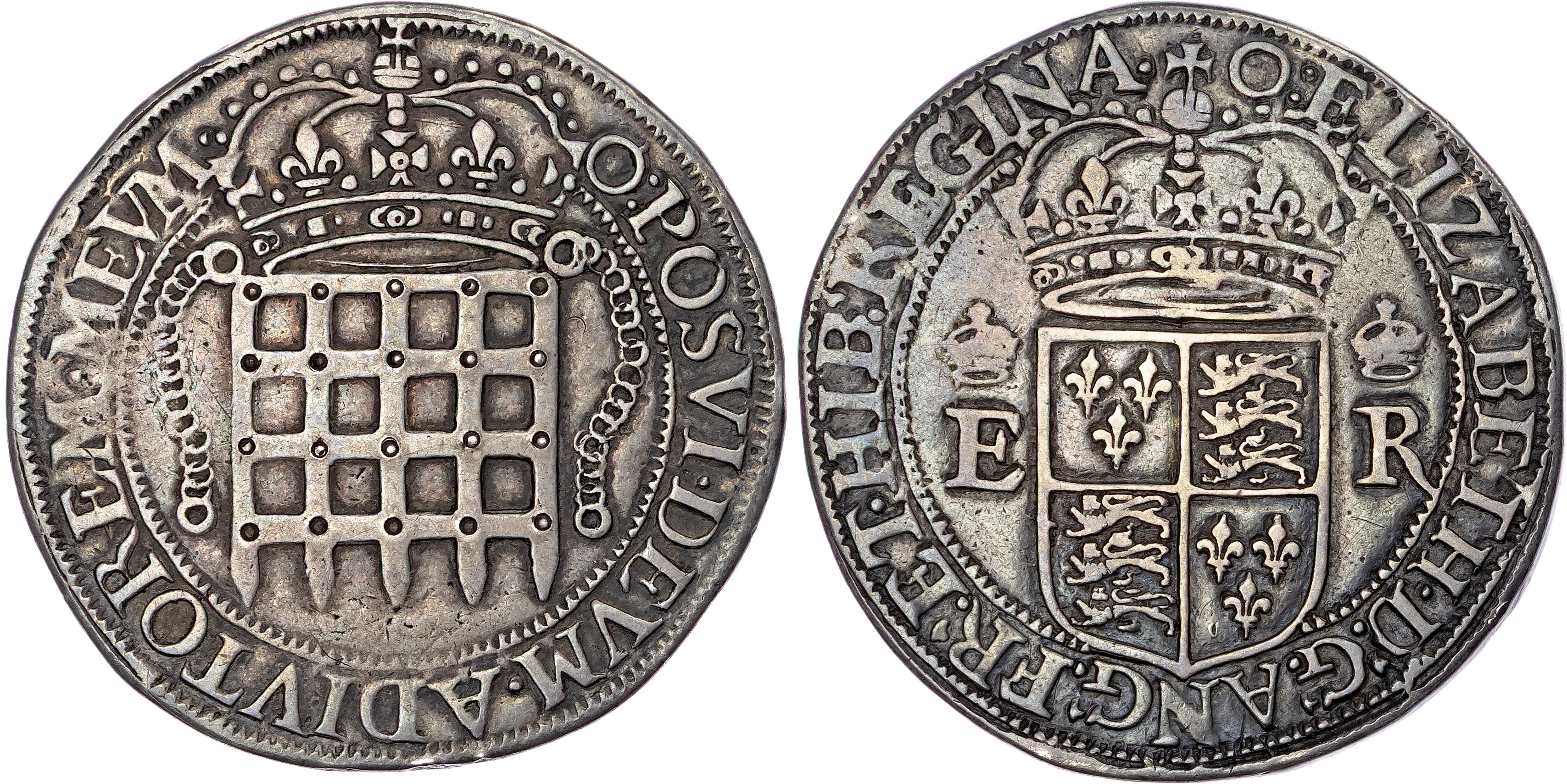

Lot 8
Elizabeth I (1558‐1603), AR Eight Testerns, East India Company, ‘Portcullis’ money, Tower (London) mint, mm. O (1600). ‡
The Abby Welsh Collection of Crowns & Halfcrowns | C26003
Auction: 29 May 2026 at 11.00 BST
£13,000
Description
Square‐topped, crowned, and quartered shield of arms, crowned E R at either side, Rev. Crowned portcullis, 26.72g/5h. (Carlbom 903; Cooper 137 (same dies); S. 2607A). Very Fine, with some ever‐so‐slight weakness to legends. Toned.
Footnote
Ex. Noonans, Auction 301 (The Hethersett Collection of Crowns and Historical Medals), June 27th, 2024, lot 6. Bt. Seaby, 1970. The minting of the so-called ‘Portcullis’ money was authorized by a Royal Warrant dated 11 January, 1601, and struck at the Tower mint in London. Four denominations were issued by the newly formed East India Company: a silver Eight, Four, Two and One Testern, to be used in overseas trade, principally in the Far East. At this time, the Spanish Eight Reales and its fractions were the trusted and accepted trade coinage, presenting an obstacle. Martin- Leake (1793) touched on this subject, noting that Queen Elizabeth I would not allow her newly commissioned trade company ‘to transport the King of Spain’s silver coin into the East-Indies...’ (An Historical Account of English Money, pp. 255-256). The sea-faring merchants complained that the Spanish coins were known in the East Indies, while hers were not. Elizabeth refused their appeal, however, saying that the trade required new coins with her effigy on one side and the portcullis on the other, so that traders in the Indies might know of her, and England’s might. When the company and the Mint guaranteed her that the largest of these coins would be of exactly the weight and fineness of the Spanish dollar, and thus would be accepted in this trade, the queen yielded to not using her image but instead her titles and royal shield, opposed by the portcullis. Only two consignments of coin were sent to the Far East, and the coinage did not succeed. They are as such rare, with surviving examples probably retained as souvenirs at the time.