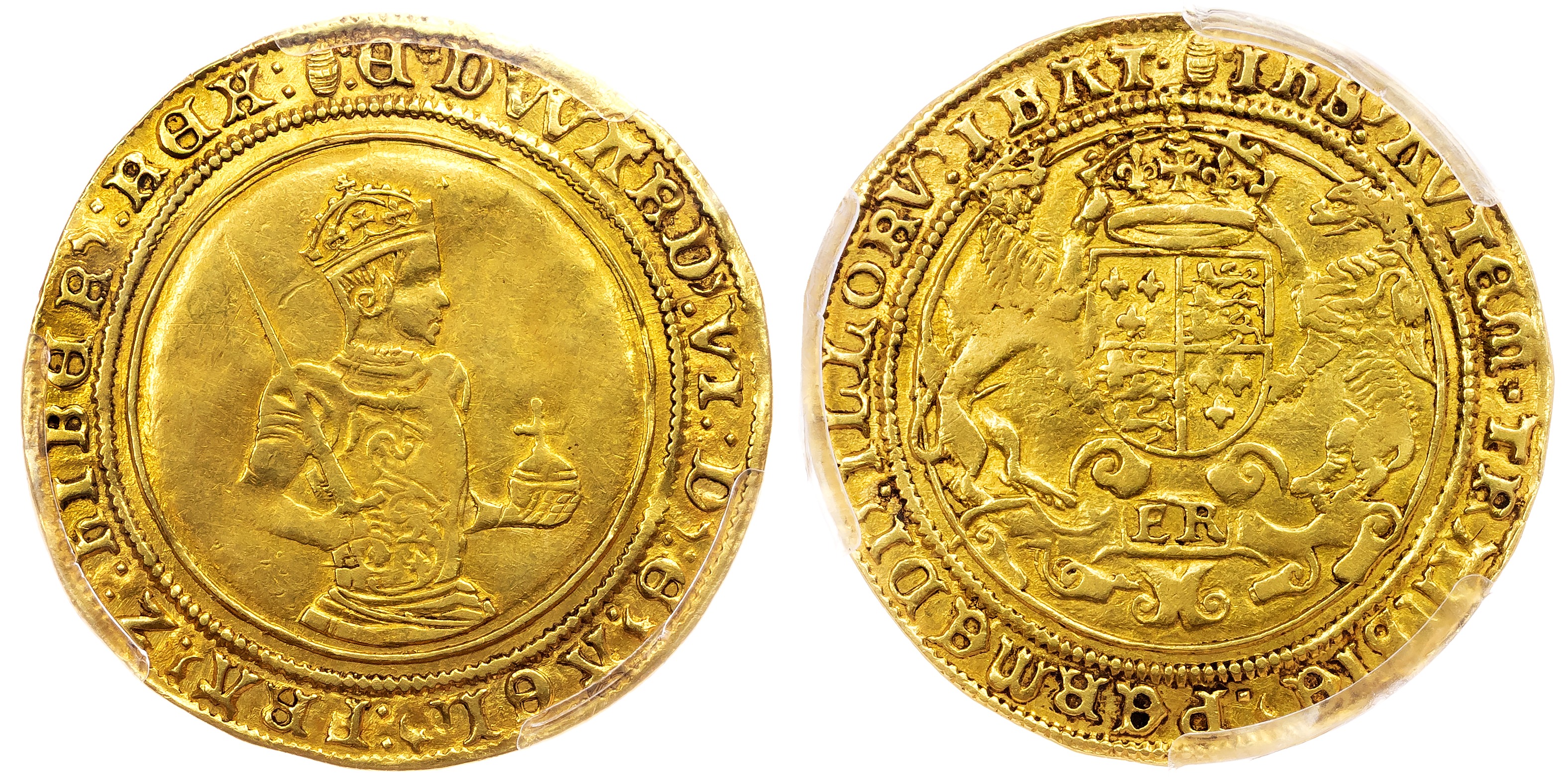

Lot 8
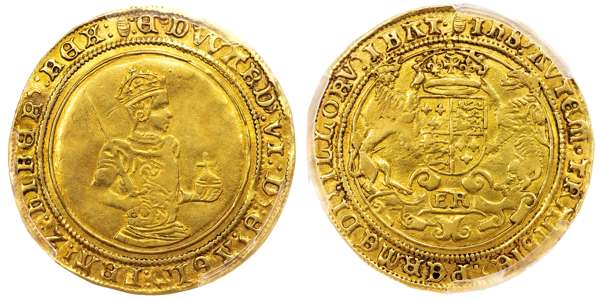
Edward VI (1547‐1553), AV Sovereign, Third Period, Crown Gold, Tower (London) mint, mm. tun (1550‐3). PCGS XF 45.
Superb Collection of Gold & British Coins | C26004
Auction: 29 May 2026 at 13.00 BST
£12,000
Description
Half‐length, crowned figure of King right, resting sword on shoulder, holding orb, Rev. Crowned square‐topped shield supported by lion to left, dragon to right, E R below in rectangular compartment, 6h. (Schneider I, 629; N. 1927; S. 2450). Encapsulated and graded by PCGS as XF45. One of five known, a rare obverse die type.
Footnote
Certification no. 504118.45/34105881. The sovereign as a denomination was introduced during the reign of Henry VII (1485-1509), and as Dr. C. H. V. Sutherland (1973) notes out it was “deliberately so called to reflect the splendour of a great gold coin of 240 grains - twice the ryal - and worth 20 shillings”. (English Coinage, 600-1900, p. 112). First conceived by order of a special commission of 1489, and engraved by Alexander of Brugsal, a German appointed in 1494 to the Royal Mint, the coin was the most elaborate ever made of gold in the British Isles, and the first tentative issues, those of both Henry VII and Henry VIII, are extremely rare. Edward VI was Henry VIII’s son by Jane Seymour, born in 1537 and not quite ten years of age when his father passed away, leaving the kingdom to him. As a child he did not rule, but was influenced to make decisions by his Council, most notably his uncles, Edward and Thomas Seymour, who were subsequently executed for treason, in 1552 and 1549, respectively.