
Lot 3
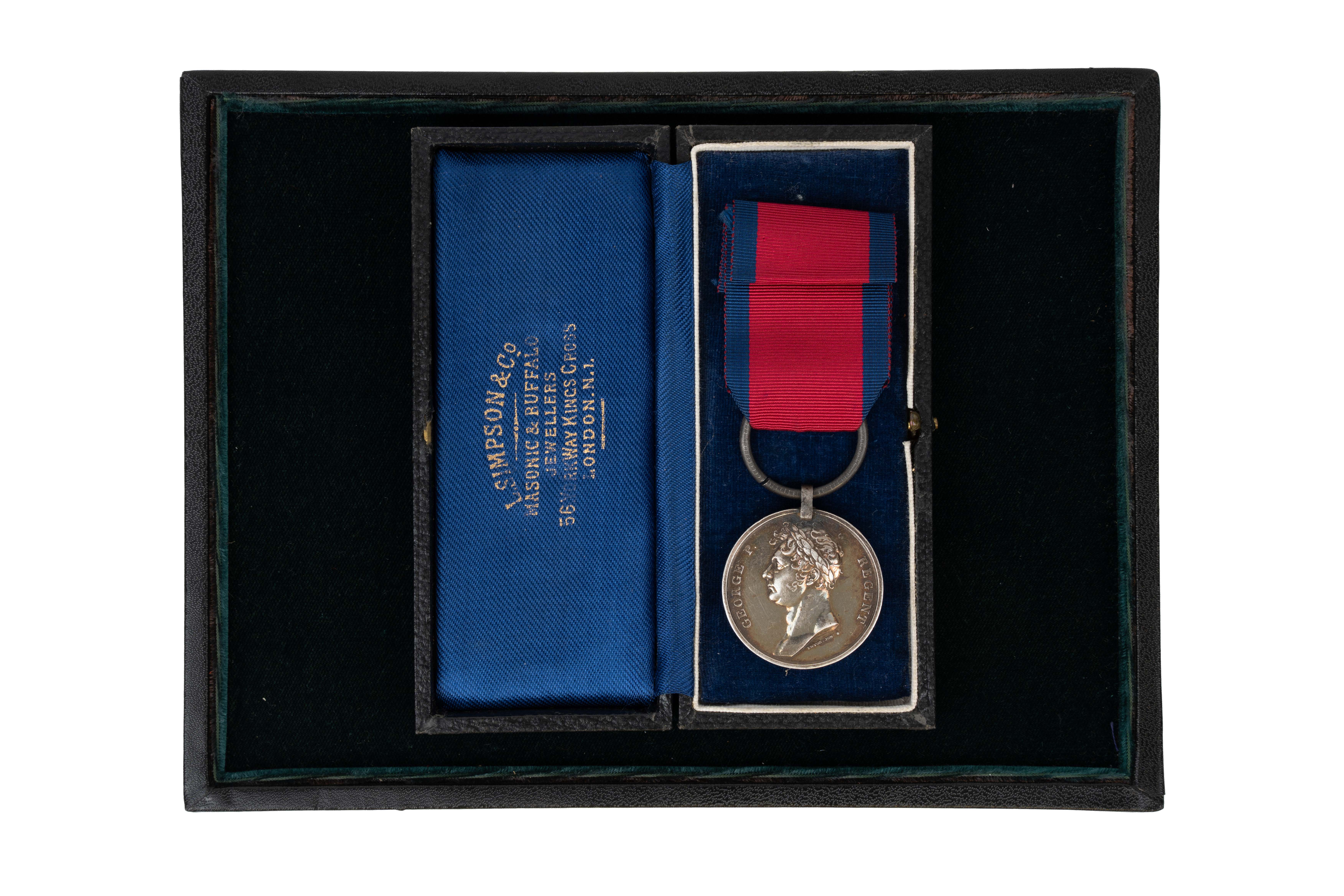
The Waterloo Medal awarded to Samuel Burrows, 3rd Battalion 14th Regiment
At Sea, On Land & In The Air | M24003
Auction: 24 September 2024 at 18:30 BST
Description
The Waterloo Medal awarded to Samuel Burrows, 3rd Battalion 14th Regiment, (Samuel Burrows, 3rd Batt, 14th Reg. Foot.), original clip and ring suspension lightly toned very fine (1)
The 14th raised a third Battalion in 1813, mostly young and inexperienced men. They fought at Waterloo as part of Colonel Hugh Mitchell's 4th Brigade in General Sir Charles Colville's 4th Division. At the start of the battle they were positioned on the extreme right of the line, near the Nivelles-Hougoumont Road. They held their position all day, forming square when threatened by French cuirassiers. Their casualties were one officer wounded, 7 men killed and 21 wounded. They marched to Paris after the battle, took part in the storming of Cambray, and returned to England in December. This battalion was disbanded in 1816.
During the battle the regiment came off lightly for injuries and deaths. The one officer wounded was Ensign Alfred Cooper who was the shortest man in the battalion. Young George Keppel, only 16 at the time, was sitting on a drum holding Col Tidy's horse when a shell hit the horse knocking Keppel over. Among the officers was a dandified young ensign, Charles Fraser, who carried one of the Colours. It was doubted that he could withstand the cannon fire that was going to test them all. At one point a young bugler of the 51st ran into their square and exclaimed, "I'm all right now!" just before a cannon-ball took his head off. Dandy Fraser was covered in the bugler's blood and brains but was heard to say quietly, "I shall have to wash my hands and face after this."
The 14th sent out some of its youngsters as skirmishers. They were under the watchful eye of experienced NCOs. They shot at some enemy horsemen and wounded several. When a French Cuirassier rode back to rescue a wounded comrade Private Thomas Witney took aim but was prevented from firing by Sgt Samuel Goddard. He pointed out that the rescuer was a 'noble fellow'.