
Lot 219
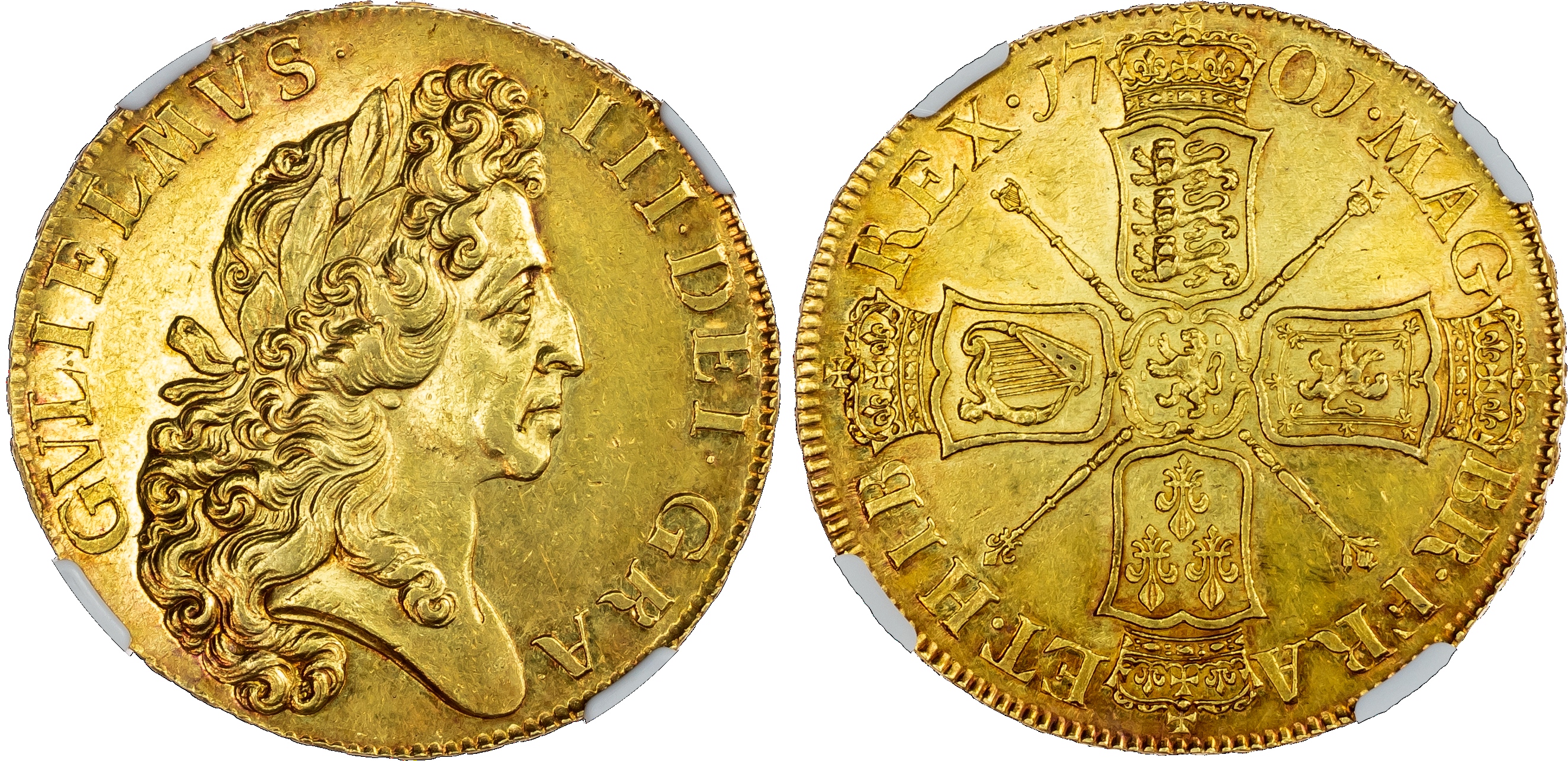
William III (1694‑1702), 'Fine Work' Five‑Guineas, 1701, NGC AU58
Ancient, British and World Coins - 114 | C24002
Auction: 7 March 2024 at 10:00 GMT
£48,000
Description
William III (1694‑1702), 'Fine Work' Five‑Guineas, 1701 DECIMO TERTIO, second laureate head right, rev. crowned shields cruciform, plain sceptres in angles, Irish harp without strings, edge lettering upwards, (EGC 399; S.3456). Choice extremely fine or better. Conservatively graded and Encapsulated by NGC as AU58.
Ex. James Perley Storer Collection, 21‑11‑1995, Lot 191.
Footnote
By the latter end of the 17th century, Isaac Newton's work at the Royal Mint transitioned from that of Warden to Mint‑master and as a man of science, Newton introduced both more control and a more scientific approach to the operations of the Mint modernising it, especially in its striking efficiency. The first 5 guineas issued for William III are noticeably different from the issue of 1701 in that the king's portrait was shallowly engraved. Newton attempted to complete the transition begun during the Renaissance, of departing from the shallow style of portraiture of the monarch to one that suggested lifelike qualities. In 1701 he caused a portrait to be deeply engraved that the mint machinery could sufficiently heavily strike.As Mint‑master, Newton's finest artistic achievement is, without argument, the deeply engraved 5 guineas of 1701, now known as the 'Fine Work' issue, and it has become one of the classics of British numismatics. His mark on English coinage and medals became indelible, and among his medals may be found exquisite images in high relief, but his greatest achievement was certainly the 'fine work' engraving of the king's portrait used in only one year, 1701, on the gold 2 guineas and 5 guineas. These are the ultimate numismatic images of the reign and rarely equalled as works of art in all the years that have followed.