
Lot 668
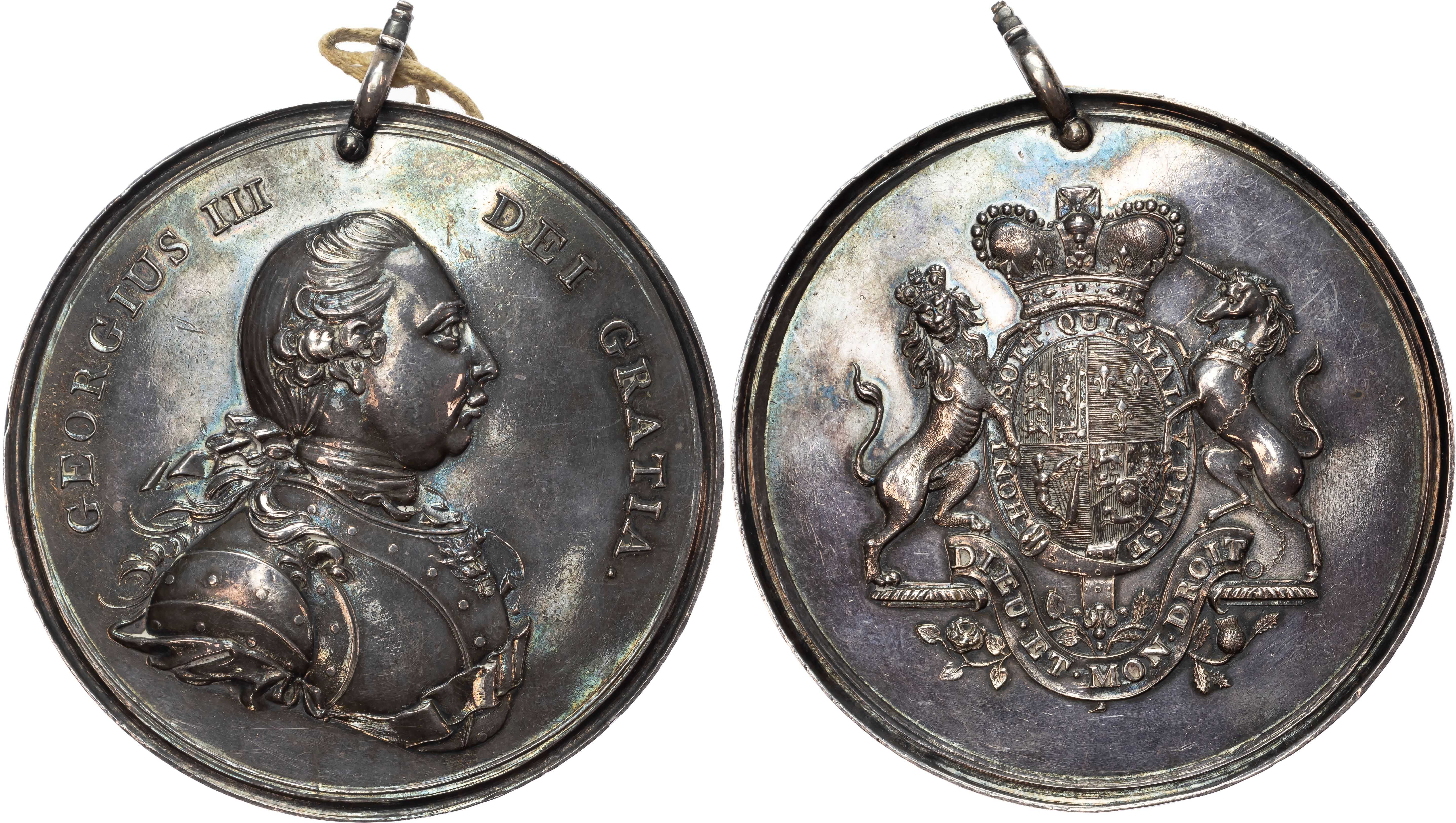
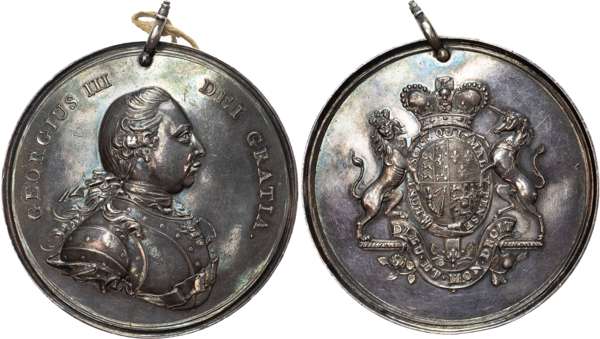
USA, George III (1760-1820), American Indian Peace, Silver Medal (80mm/98.16gm), c. 1770 or later, large size.
Ancient, British and World Coins, and Medals - 118 | C24009
Auction: 21 October 2024 at 10:00 BST
Description
Youthful bust of the King right, wearing armour, six rivets above sash, his hair tied behind, curls above ear, GEORGIUS III DEI GRATIA. Rev, the Royal arms, crowned, within Garter, with lion and unicorn supporters, lion’s paw to N in HONI. Original decorated suspension loop (Eimer 736a; Betts 435). Extremely Fine, wiped in antiquity as is typical and now toned a steely grey with hints of turquoise. Very rare, Eimer suggests “a total of eighty-six large […] medals are recorded and there is reckoned on there being at least double those number extant. The medal represents a form of diplomatic offering or exchange.”
Believed to be acquired by an officer surnamed either Tudor or Risk, subsequently Tudor-Risk in the 19th century. The “Army Lists” by Worthington Chauncey Ford records an Edward Tudor in a 1798 Army List showing on Half Pay as 2nd Lieutenant in the 85th Foot, disbanded 1763. On the same page, there is also a Richard Tudor on Half Pay as Lieutenant in the 95th Foot. In British Officers Serving In America 1754-1774, published in 1894, Edward is shown as 43rd Foot, not 85th, and Richard is shown as 95th Foot, but both believed to be the same as in the “Army Lists”.
The 43rd returned to North America in 1774 after 12 years away and remained throughout the American War of Independence (1775-1783), so this seems the most likely source from our research. The 95th did see action in North America but during the Seven Years’ War (1756–1763). The 85th was originally intended for service in the North American campaign but instead served in Europe.